*IV Ketamine and NAD+ and the Stellate Ganglion Block have been used clinically off-label for decades. They are not FDA approved for the treatment of any psychiatric or pain condition. All medical treatments carry risks and benefits that you must discuss with a doctor at Clarus Health to learn if these therapies are right for you.
Astaxanthin has become one of the most talked-about “skin antioxidants” in recent years, promoted as a supplement that can reduce wrinkles, brighten skin, and even protect against UV damage. But how strong is the actual science, and does it meaningfully benefit the skin?
Here’s what the evidence really shows for astaxanthin's effects on skin.
What Is Astaxanthin?
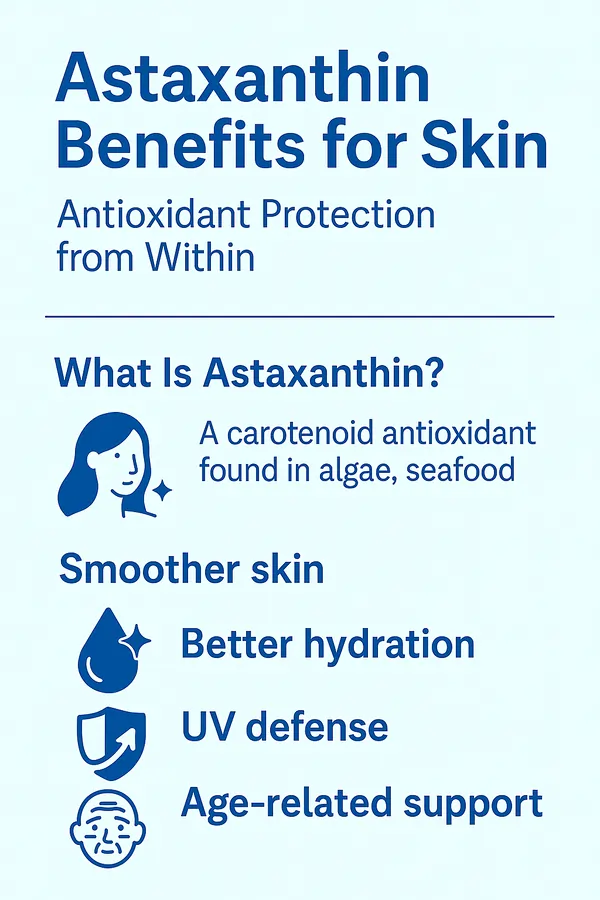
Astaxanthin is a naturally occurring carotenoid found in microalgae and the seafood that eat it (salmon, krill, shrimp).
Humans can't form carotenoids - they need to eat them.
How Does Astaxanthin for Skin Compare to Other Supplements?
Vitamin C → strong collagen and antioxidant effects but unstable orally
Niacinamide → strong for barrier and pigmentation
Collagen peptides → benefit dermal density
Green tea polyphenols → antioxidant + anti-inflammatory
Astaxanthin is unique for its strong UV-protective and membrane-stabilizing effects, not replicated by most oral antioxidants.
How Much Astaxanthin for Skin Benefits?
Always talk with your doctor before starting any supplements. In general, our doctors recommend 4–12 mg/day of astaxanthin. Most patients will begin to experience benefits within 6-12 weeks. High-quality algae-derived astaxanthin is preferred over synthetic supplements.
Are There Risks for Astaxanthin for Skin?
As with all supplements, there are risks with astaxanthin though it's overall well tolerated by most patients. Some of the side effects include:
Gastrointestinal effects
Bleeding risks
Blood pressure changes
Changes in glucose levels
Unknown safety in pregnancy, lactation, and in children
Product quality is very important when selecting a supplement! Always seek out third-party–tested products.
Read Dr. Kaveh's full article on the risks of astaxanthin.
Beyond Astaxanthin: Start Your Longevity Journey Today
Astaxanthin is a powerful antioxidant with skin, cardiovascular, and neurocognitive health benefits.
But your health is about much more than just supplements.
To learn if astaxanthin might be useful for your skin and longevity, speak with a doctor at Clarus Health today to begin forming a personalized longevity plan. Your health simply isn't one-size-fits-all the way the supplement industry might lead you to believe.
Take the First Step
Start feeling better today.
At Clarus Health, we treat the root cause — not just the symptoms. A free 15-minute consultation is where it starts.
Dr. Kaveh is a Stanford and Harvard-trained anesthesiologist and integrative medicine specialist. He has over 1,000,000 followers on social media and has guided over 6,000 patients throughout transformative healing experiences. He is a medical educator on Ketamine, the Stellate Ganglion Block, Hormone Replacement, and NAD+ therapies.