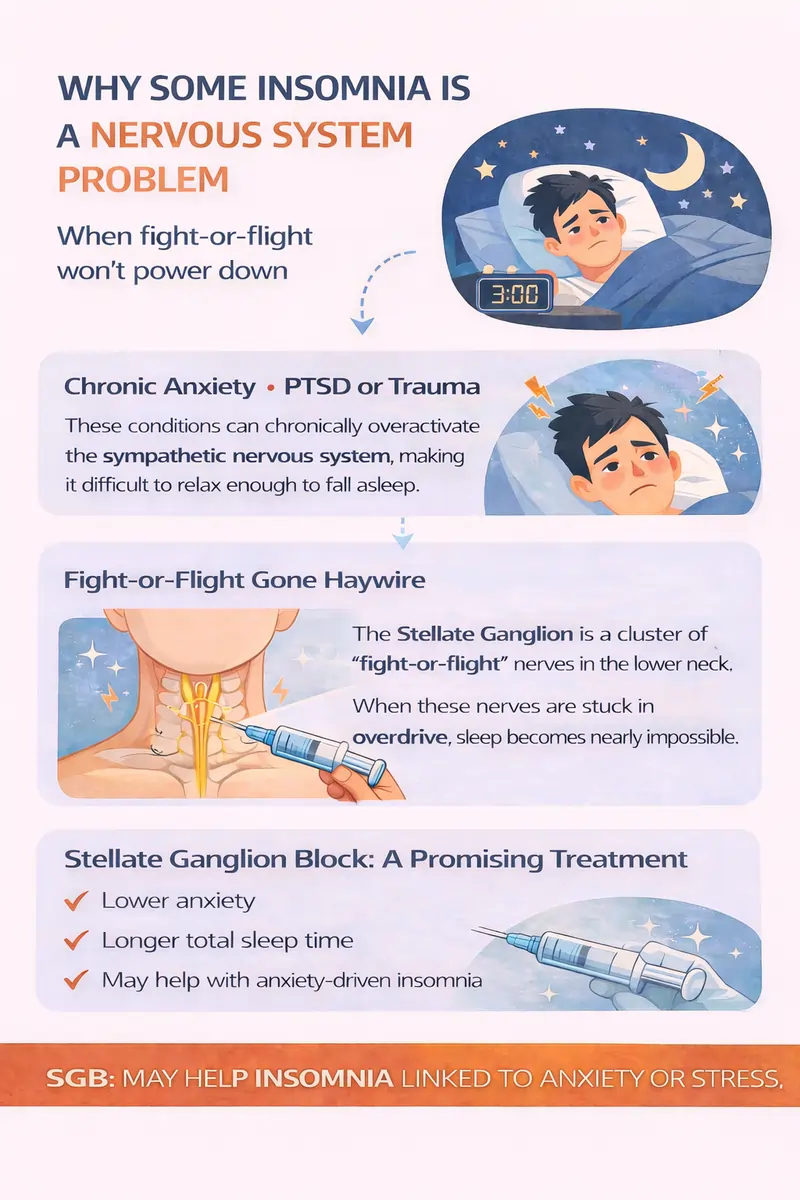
The Stellate Ganglion Block (SGB) can improve sleep in patients whose insomnia is driven by anxiety, chronic stress, or an overactivated fight-or-flight response
*IV Ketamine, NR, and NAD+ have been used clinically off-label for decades. They are not FDA approved for the treatment of any psychiatric or pain condition. All medical treatments carry risks and benefits that you must discuss with a doctor at Clarus Health to learn if these therapies are right for you.
Why Some Insomnia Is a Nervous System Problem
Not all insomnia comes from bad habits or poor sleep hygiene. For many patients, the real problem is a sympathetic nervous system that simply won't power down.
You know the feeling: wired but tired. Your body is done but your brain hasn't gotten the memo.
When the sympathetic nervous system stays chronically overactivated — driven by anxiety, trauma, or persistent stress — sleep becomes physiologically difficult. The Stellate Ganglion Block can provide hope to patients struggling with this pattern of insomnia.
What Is a Stellate Ganglion Block (SGB)?
The stellate ganglion is a cluster of "fight flight" nerves in the lower neck. It acts as a major relay station for the body's stress signaling to the brain and upper body.
A Stellate Ganglion Block (SGB) is a targeted injection of local anesthetic directly to this bundle of nerves. The procedure takes roughly 15 minutes. By temporarily interrupting sympathetic nerve transmission, it offers the nervous system a chance to reset — reducing the chronic overactivation that keeps some patients awake at night.
SGB has been used in pain medicine for decades. More recently, researchers have been investigating its role in conditions driven by sympathetic excess: PTSD, anxiety, hot flashes, and insomnia.
Stellate Ganglion Block
Ready to sleep again?
The Stellate Ganglion Block quiets your fight-or-flight response at the source — offering lasting relief for insomnia, anxiety, and PTSD when supplements and sleep aids haven't been enough.
A 2025 randomized controlled trial enrolled 128 patients with generalized anxiety disorder and significant sleep disturbance. The group that received SGB showed meaningfully better sleep quality, longer total sleep time, and improved sleep efficiency compared to standard treatment alone.
A second 2025 study followed 124 patients with chronic insomnia. Patients who received SGB combined with cognitive behavioral therapy for insomnia (CBT-I) had significantly better outcomes at 6 and 12 weeks — and needed less sleep medication — than those who received SGB alone.
A 2025 retrospective study found that ultrasound-guided SGB combined with acupuncture sleep quality in patients with insomnia comorbid with anxiety and depression. Unfortunately, some of these studies did not include control groups for comparison.
The consistent finding across this literature: when the sympathetic nervous system is calmed, sleep tends to improve.
Who Is a Good Candidate for Stellate Ganglion Block?
SGB for insomnia may be appropriate for patients whose sleep problems are linked to:
Insomnia that has not responded to behavioral or medication-based treatments
It is not a first-line treatment for insomnia caused by sleep apnea, circadian rhythm disorders, or substance use. A thorough evaluation is essential before proceeding. You can learn more about SGB side effects and what to expect before your consultation.
Start Healing Your Insomnia Today
At Clarus Health, Dr. Anthony Kaveh offers stellate ganglion block as part of an integrative approach to nervous system-based conditions — including anxiety, PTSD, long COVID, and for the right candidates, insomnia.
SGB is not a replacement for evidence-based behavioral treatment. CBT-I remains the gold standard first-line intervention for chronic insomnia, and the strongest outcomes in the literature come from combining the two.
For patients who have done the work and are still struggling, SGB offers something different: treatment at the level of the nervous system itself, not just the symptom downstream. Contact Clarus Health today to speak with a doctor about how the Stellate Ganglion Block can help your insomnia.
Take the First Step
Start feeling better today.
At Clarus Health, we treat the root cause — not just the symptoms. A free 15-minute consultation is where it starts.
Dr. Kaveh is a Stanford and Harvard-trained anesthesiologist and integrative medicine specialist. He has over 1,000,000 followers on social media and has guided over 6,000 patients throughout transformative healing experiences. He is a medical educator on Ketamine, the Stellate Ganglion Block, Hormone Replacement, and NAD+ therapies.