Which astaxanthin supplement is safest and most effective?
*IV Ketamine, NR, and NAD+ have been used clinically off-label for decades. They are not FDA approved for the treatment of any psychiatric or pain condition. All medical treatments carry risks and benefits that you must discuss with a doctor at Clarus Health to learn if these therapies are right for you.
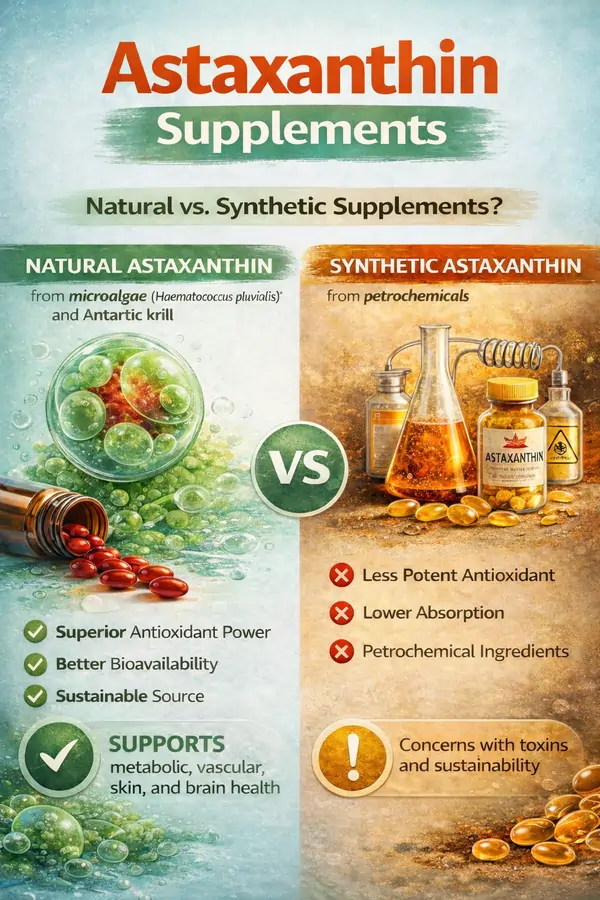
Natural astaxanthin from the algae Haematococcus pluvialis is considered superior to synthetic versions. These microalgae represent the most important commercial source for natural astaxanthin. These natural forms, like that found in algae and Antarctic krill, include a fatty acid structure (astaxanthin esters) that demonstrate enhanced stability, antioxidant activity, and bioavailability compared to free astaxanthin. Sustainable extraction methods, particularly supercritical CO₂ extraction, are increasingly common and maintain safety and efficacy.
Clarus Health · Longevity Medicine
Supplements are one piece. Your biology tells the rest.
Our advanced longevity panel tests 150+ biomarkers — inflammation, hormones, metabolic age, and cellular health — so you know exactly where to focus.
In its natural form, astaxanthin supplements appear very well tolerated in the trials up to 20mg per day. There are risks with any form of astaxanthin supplementation, though these dangers can be mitigated in discussion with your doctor.
Dr. Kaveh is a Stanford and Harvard-trained anesthesiologist and integrative medicine specialist. He has over 1,000,000 followers on social media and has guided hundreds of patients throughout transformative healing experiences. He is an authority on Ketamine, NAD, SGB, and genomics-guided therapies. He is a continuing medical education lecturer in the Bay Area.