Is Ketamine Therapy Dangerous?
Is Ketamine Therapy dangerous? Learn the risks from a ketamine specialist
*IV Ketamine, NR, and NAD+ have been used clinically off-label for decades. They are not FDA approved for the treatment of any psychiatric or pain condition. All medical treatments carry risks and benefits that you must discuss with a doctor at Clarus Health to learn if these therapies are right for you.

Is Ketamine Therapy Dangerous?
What has the last 25 years shown us about ketamine's risks?
Ketamine has become one of the most innovative modalities for depression, anxiety, suicidal ideation, and PTSD. The rapid relief from IV ketamine sometimes sounds too good to be true, raising an important question: is ketamine therapy dangerous?
The latest data from 2025, summarizing over 40 articles, showed that doctor supervised ketamine therapy is very safe. But like any powerful treatment, ketamine has risks — and those risks are closely tied to how, where, and by whom it’s delivered.
Here are the top risks patients ask about before starting Ketamine Therapy.
1. Can Ketamine Therapy Change Your Personality?
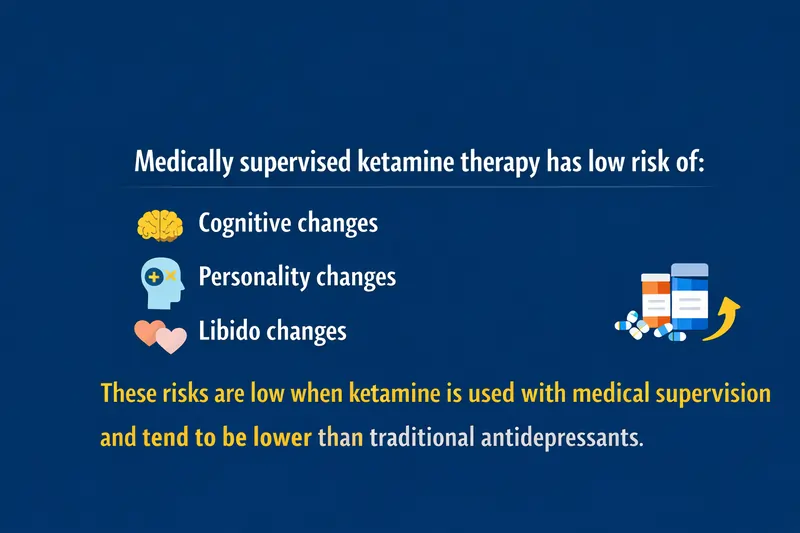
Concerns about ketamine therapy causing “brain damage” come from high-dose or recreational use, not from medically supervised therapy. Medically supervised ketamine therapy, both IV and with Spravato, do not show evidence of cognitive harm. High doses without supervision, however, can have neurotoxic side effects.
Can Ketamine Therapy Hurt Your Intelligence?
Many studies have investigated the improvements in mood and resilience with ketamine therapy. These studies have not demonstrated negative personality changes from medically supervised ketamine therapy.
In fact, many studies have even found cognitive improvements from ketamine therapy.
2. Ketamine and Heart Health
Ketamine can raise blood pressure and heart rate temporarily. This is expected and your when supervised by a doctor, your vitals are carefully monitored for this reason.
When receiving IV ketamine therapy or Spravato, your doctor will screen you for cardiovascular risk factors, like medications and health history. Most patients tolerate transient increases in heart rate and blood pressure without any difficulties. However, sometimes these changes require treatment, and your doctor will treat you based on your health and medication history.
3. "Dissociation" From Ketamine Therapy
Many patients experience mild dissociation (out-of-body feelings) during ketamine therapy. This is not a sign of harm. It is transient and resolves shortly after treatment. It is important for you to discuss this experiential component to ketamine therapy with your doctor before starting.
Patients tolerate this experience very well, with discontinuation rates lower than most other antidepressant medications.
4. Is Ketamine Therapy Addictive?
Ketamine is a powerful medication that can be a substance of abuse when used without supervision. It is a schedule III controlled substance, making it less risky than opioids.
Fortunately, when used with medical guidance, the risks of addiction and misuse appear quite low. The risks of ketamine addiction arise from recreational use in unregulated, high dose, and unmonitored settings.
In contrast, medical ketamine therapy is controlled, low dose, supervised, and typically only administered 6–8 sessions at defined intervals.
5. Can Ketamine Therapy Cause Suicidal Ideation?
It's the opposite: one of ketamine’s most compelling findings is its rapid reduction in suicidal thoughts. Many studies have demonstrated this consistent finding.
Many patients see meaningful improvement within hours of their first dose.
What Makes Ketamine Therapy Safer in Medical Use
The key protective factors in clinical ketamine treatments:
- Speaking with your doctor before starting for optimal mindset preparation
- Medical monitoring during administration, both IV and Spravato
- Sub-anesthetic doses are much safer than anesthetic or recreational doses
- Integration and follow-up, with psychotherapy or supportive care, not just a “shot and go”
When Ketamine Therapy Can Be Dangerous
Ketamine is not risk-free. The danger arises when:
- It’s used outside medical supervision
- Combined with sedatives, alcohol, or opioids
- Given without proper patient screening
- Administered by non-medical practitioners
These scenarios, not ketamine therapy itself, are where serious adverse events occur.
Is Ketamine Therapy Right for You?
When Ketamine therapy is under medical supervision, its benefit–risk profile in treatment-resistant depression and suicidal ideation is favorable compared with untreated severe mood disorders. While Ketamine therapy is quite safe, it's not risk free.
Don't let convenience or clever marketing override basic safety. Find a doctor who actually sees you, discusses risks honestly, and isn't just trying to sell you more sessions.
Speak with a doctor at Clarus Health today to learn if IV ketamine therapy may help your depression, anxiety, PTSD, or chronic pain.

Anthony Kaveh MD
Dr. Kaveh is a Stanford and Harvard-trained anesthesiologist and integrative medicine specialist. He has over 1,000,000 followers on social media and has guided hundreds of patients throughout transformative healing experiences. He is an authority on Ketamine, NAD, SGB, and genomics-guided therapies. He is a continuing medical education lecturer in the Bay Area.