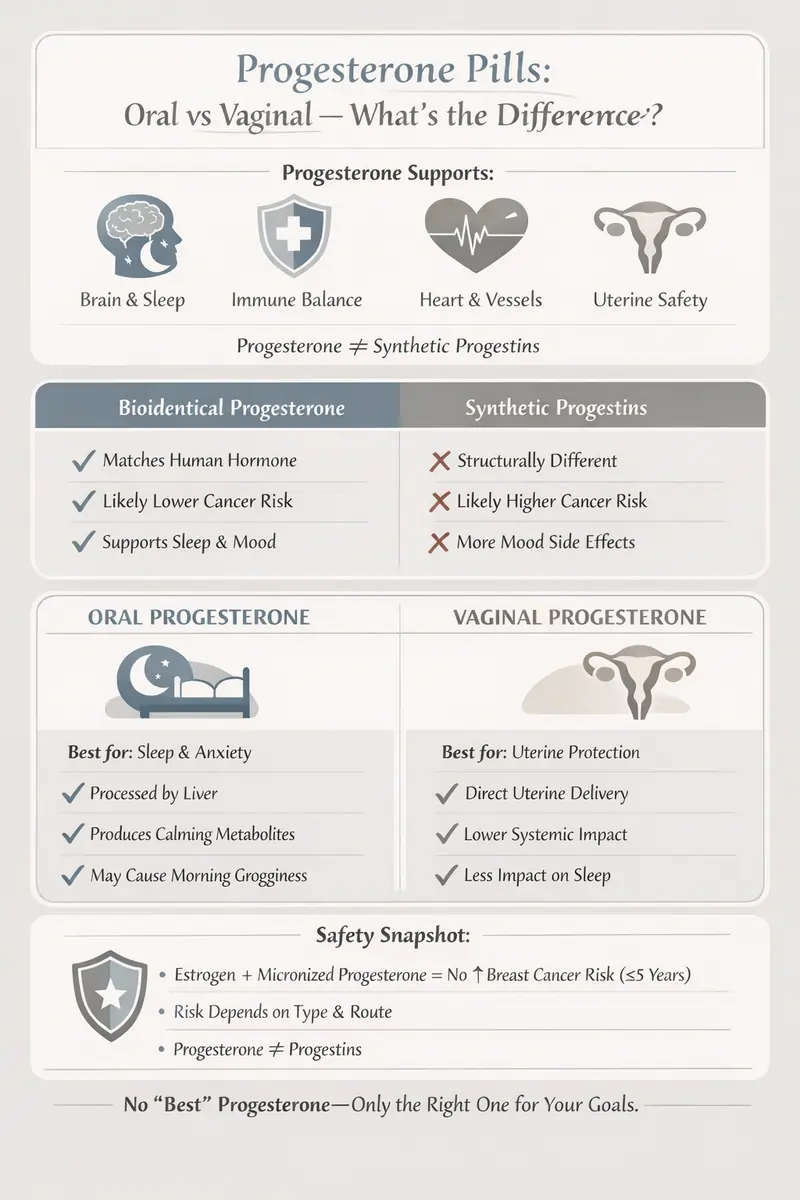
Progesterone Pills: Which is Better, Oral or Vaginal?
Are progesterone pills better orally or vaginally?
*IV Ketamine, NR, and NAD+ have been used clinically off-label for decades. They are not FDA approved for the treatment of any psychiatric or pain condition. All medical treatments carry risks and benefits that you must discuss with a doctor at Clarus Health to learn if these therapies are right for you.
Progesterone is one of the most misunderstood hormones in modern medicine. It's frequently avoided, underdosed, or replaced with synthetic substitutes based on outdated assumptions that fail to distinguish between progesterone and progestins. The difference matters to our patients.
Dr. Kaveh will discuss:
Why progesterone is essential to the body
Why bioidentical progesterone differs from synthetic progestins
How oral versus vaginal progesterone compare, particularly for sleep and mood
Progesterone: Oral or Vaginal?
Both are effective. The right route depends on what your body needs most.
Why Progesterone Matters and the Risks of Avoiding Progesterone Pills or Creams
Progesterone is not just a “uterine protection” hormone the way doctors thought for decades. Progesterone has widespread actions throughout the body, especially in the nervous system and immune system. When hormone replacement therapy (HRT) is avoided, there are measurable health consequences:
A landmark analysis found that estrogen avoidance after hysterectomy was associated with excess mortality
Earlier population data from Sweden similarly showed reduced all-cause mortality in women using HRT
When estrogen is replaced without appropriate progesterone, women may experience worsening sleep, mood instability, bone loss, and increased endometrial cancer risk.
Hormone Specialist Consultation
The right progesterone is only part of the picture.
Dr. Kaveh builds a complete hormonal picture — using advanced testing across estrogen, testosterone, thyroid, cortisol, and 150+ biomarkers — to create a treatment plan that addresses what's actually driving your symptoms, not just the numbers on a lab report.
Bioidentical Progesterone vs. Synthetic Progestins: Not the Same Hormone Orally or Vaginally
Much of the fear surrounding “progesterone” originates from studies that did not study progesterone at all, but rather synthetic progestins.
Multiple high-quality studies show that bioidentical micronized progesterone has a meaningfully different safety profile, particularly with respect to breast cancer risk:
A systematic review and meta-analysis demonstrated lower breast cancer risk with progesterone compared to synthetic progestins when combined with estrogen
The E3N-EPIC cohort found that synthetic progestins increased breast cancer risk, whereas progesterone did not show the same signal
Follow-up analyses from the same cohort confirmed unequal breast cancer risks depending on progestogen type, again favoring progesterone
An international expert panel concluded that estrogens combined with oral or vaginal micronized progesterone do not increase breast cancer risk for up to five years
Treating progesterone and progestins as interchangeable is scientifically inaccurate.
What Oral and Vaginal Progesterone Do in the Body
Progesterone receptors are expressed throughout the body, explaining its broad physiological effects:
Immune system
Modulates inflammatory signaling
Promotes immune tolerance
Reduces mast-cell activation
Cardiovascular system
Supports vascular relaxation
Counterbalances estrogen-driven coagulation
Improves endothelial function
Neurological system
Converts to allopregnanolone, a potent GABA-A receptor modulator
Progesterone’s neuroactive role is particularly relevant for mood and sleep. A 2023 review highlights progesterone and its metabolites as beneficial regulators of affect in the female brain.
Oral vs. Vaginal Progesterone: Key Clinical Differences
Both oral and vaginal progesterone are effective, but they behave very differently pharmacologically. The right of progesterone depends on your complete hormone picture: not just progesterone, but how it's balancing with estrogen, thyroid, and cortisol. That's why we assess the full panel before recommending a progesterone formulation as part of our bioidentical hormone replacement therapy in San Francisco.
Oral Micronized Progesterone
Oral progesterone undergoes first-pass metabolism in the liver, producing neuroactive metabolites such as allopregnanolone. This explains why oral progesterone is often superior for:
Sleep onset and continuity
Nighttime anxiety reduction
Overall calming effects
The trade-offs include lower serum progesterone levels and greater variability between individuals.
Vaginal Progesterone, Including Creams and Pills/Suppositories
Vaginal progesterone bypasses hepatic first-pass metabolism and produces a “vaginal first-pass effect,” delivering higher concentrations directly to the uterus.
This route is often preferred when the primary goal is endometrial protection without systemic sedation.
As long as natural progesterone is being used, the effects on mood and depression are believed to be positive, regardless of oral pills or vaginal creams or suppositories. There are some exceptions, which is why you should always work with a physician who is expert in managing different forms of HRT.
Progesterone Pill Safety Summary: Oral and Vaginal
The evidence supports several clear conclusions:
Progesterone is a vital hormone for your brain, immune system, bones, and uterine health
Oral progesterone tends to have more calming effects for sleep and anxiety
Vaginal progesterone appears to offer good endometrial protection in women, with fewer side effects
You should work with a hormone expert who understands how to use different forms of hormones to tailor treatment to your needs
Bottom Line: Should You Take Progesterone Pills?
The right form of progesterone therapy depends on you and your medical history. There is no universally “better” form of progesterone - only a better fit for the individual patient. Oral progesterone is often preferred for sleep and anxiety. Vaginal progesterone can provide uterine protection with minimal systemic effects. Importantly, bioidentical progesterone is not the same as synthetic progestins.
Dr. Kaveh is a Stanford and Harvard-trained anesthesiologist and integrative medicine specialist. He has over 1,000,000 followers on social media and has guided hundreds of patients throughout transformative healing experiences. He is an authority on Ketamine, NAD, SGB, and genomics-guided therapies. He is a continuing medical education lecturer in the Bay Area.