Ketamine for Depression: Which Medications Should You Stop Before Treatment?
What medications need to be stopped before ketamine therapy?

Medically reviewed by Anthony Kaveh, MD
Stanford & Harvard-trained
Board-certified anesthesiologist
*IV Ketamine and NAD+ and the Stellate Ganglion Block have been used clinically off-label for decades. They are not FDA approved for the treatment of any psychiatric or pain condition. All medical treatments carry risks and benefits that you must discuss with a doctor at Clarus Health to learn if these therapies are right for you.
Many patients ask whether they need to stop their medications before starting ketamine for treatment-resistant depression. The reality is:
- Most medications do not need to be stopped
- A few, especially benzodiazepines and naltrexone, can blunt ketamine’s antidepressant effect
- Some medications can increase heart rate and blood pressure when used with ketamine
- No one should stop any medications without a prescriber’s supervision.
Dr. Kaveh shares what patients need to know about their medications before starting ketamine for depression.
Do You Need to Stop Medications Before Ketamine for Depression?
In most cases, no. Ketamine is often used as augmentation on top of existing antidepressants, and the data support that this is safe and generally effective.
The main medications of concern are benzodiazepines, naltrexone, lamotrigine, and stimulants.
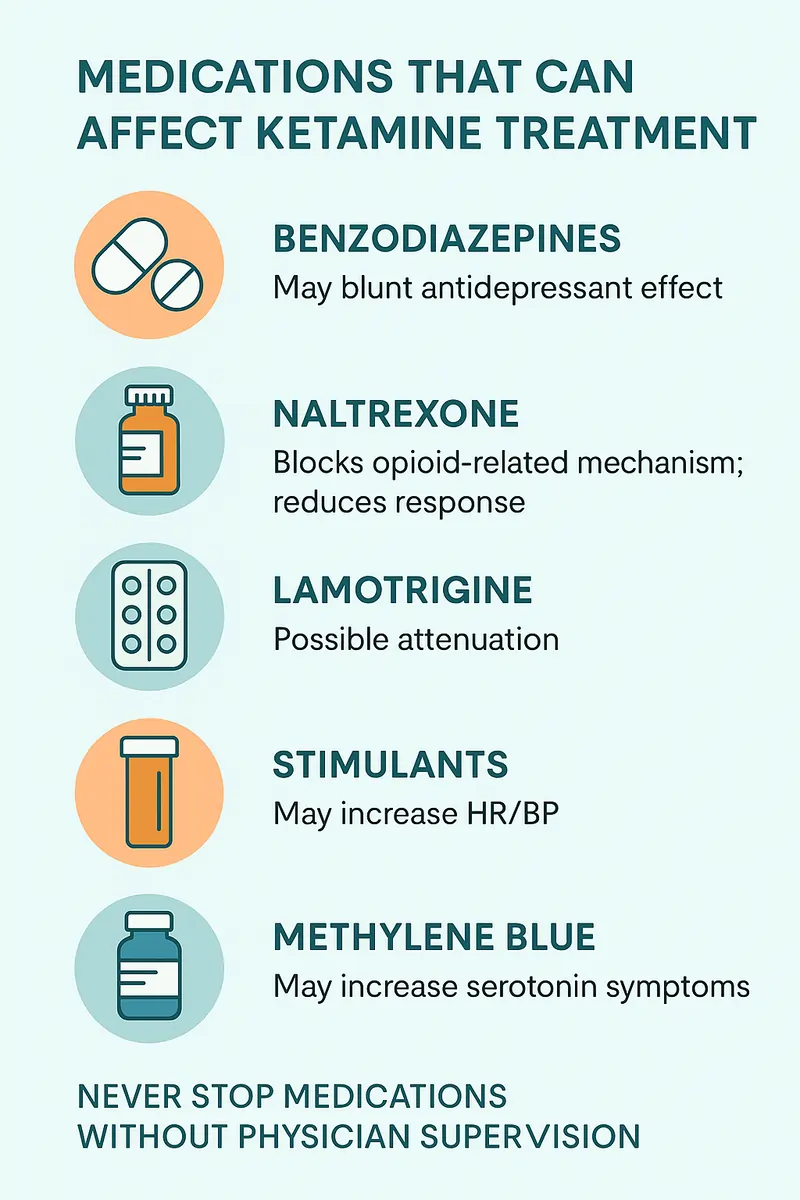
1. Benzodiazepines Can Reduce Antidepressant Effects of Ketamine
Examples: alprazolam (Xanax), lorazepam (Ativan), clonazepam (Klonopin), diazepam (Valium)
Effect: Attenuates ketamine’s antidepressant response
Benzodiazepines reduce both the magnitude and duration of ketamine's antidepressant effects. Higher doses of benzodiazepines appear to more strongly reduce the antidepressant effects of ketamine. We believe this is due to shared GABA targets, as both ketamine's antidepressant activity and GABA receptor activation in the medial prefrontal cortex appear to have opposing effects.
You should never abruptly stop your medications, especially benzodiazepines. Dr. Kaveh works with his patients to reduce these medications prior to ketamine therapy to balance anxiety with the antidepressant effects of IV ketamine. Tapering any medications should always be coordinated with the prescribing clinician.
2. Naltrexone at "Normal" Doses Reduces Ketamine's Antidepressant Effects
Example: Vivitrol, low dose naltrexone
Effect: Attenuates ketamine’s antidepressant response
Naltrexone is an opioid receptor antagonist, and it can dramatically block ketamine's antidepressant effects. Pretreatment with naltrexone 50 mg significantly reduced antidepressant response compared to placebo. Interestingly, this study suggests ketamine's acute antidepressant action requires opioid system activation. It is unclear if low dose naltrexone (LDN) can also interfere with this effect, so you should always discuss this potential interaction with your doctor.
3. Lamotrigine
Example: Lamictal
Effect: May attenuates ketamine’s antidepressant response
Lamotrigine inhibits glutamatergic signaling, which may reduce ketamine's effects. Two of five studies examining this interaction indicated attenuation of ketamine's antidepressant response. This is mechanistically plausible given that ketamine's therapeutic effects depend on glutamate release and NMDA receptor activation downstream of its initial antagonism.
As with benzodiazepines, lamotrigine should never be stopped with consulting with you prescribing doctor.
4. SSRIs and SNRIs
Examples: Prozac, Zoloft, Paxil
Effect: No appreciable interactions observed
SSRI and SNRI medications appear safe when used in combination with ketamine therapy. Most patients will continue these medications through their ketamine treatment.
5. Stimulants for ADHD
Examples: Adderall, Vyvanse, Dexedrine, Ritalin, Concerta, Focalin
Effect: Increases in heart rate and blood pressure
Stimulants often used to treat ADHD can have cardiovascular effects when taken with ketamine therapy. This can manifest as increased heart rate and blood pressure because both ketamine and stimulants can increase heart rate and blood pressure. You should always notify your doctor of any stimulants that you use so your doctor can prevent and treat these cardiovascular effects in your body. IV ketamine is preferable because it allows rapid IV access to treat changes in blood pressure and heart rate.
6. Methylene Blue
Methylene blue is used for many off label purposes, including for cognitive support and depression. Methylene blue is a monoamine oxidase A (MAO-A) inhibitor that can cause serotonin toxicity when combined with serotonergic medications. While ketamine is not primarily a serotonergic agent, it does have effects on serotonin receptors among its multiple pharmacological targets. You should always tell your doctor about any methylene blue use before starting ketamine therapy.
Ketamine Therapy for Depression: Safety is Critical
Most patients can safely continue their regular medications during ketamine therapy, but a few, especially benzodiazepines and naltrexone, can meaningfully blunt its antidepressant benefits. Others, like stimulants and methylene blue, can cause cardiovascular complications. The key is not to stop anything on your own. Your doctor must review your medications to ensure you receive ketamine as safely and effectively as possible.
With the right guidance, ketamine can be a powerful tool for mental and physical health. Speak with a doctor at Clarus Health today to learn if IV ketamine therapy or Spravato may help your depression, anxiety, PTSD, or chronic pain.

Anthony Kaveh MD
Dr. Kaveh is a Stanford and Harvard-trained anesthesiologist and integrative medicine specialist. He has over 1,000,000 followers on social media and has guided over 6,000 patients throughout transformative healing experiences. He is a medical educator on Ketamine, the Stellate Ganglion Block, Hormone Replacement, and NAD+ therapies.