Low Estrogen Symptoms Explained
Low estrogen symptoms are misdiagnosed as normal aging - learn to take back control of year health
*IV Ketamine, NR, and NAD+ have been used clinically off-label for decades. They are not FDA approved for the treatment of any psychiatric or pain condition. All medical treatments carry risks and benefits that you must discuss with a doctor at Clarus Health to learn if these therapies are right for you.

Low Estrogen Symptoms Explained
The fatigue, brain fog, mood swings, weight gain, and low libido that women blame on aging may actually be symptoms of low estrogen. Here is what low estrogen actually does — and what to do about it.
Low estrogen is one of the most under-recognized causes of poor health in women over 35. It is not just a reproductive issue. Estrogen regulates brain, mood, metabolism, bone, cardiovascular, and sexual health... but most women are told their symptoms are just stress, aging, or anxiety.
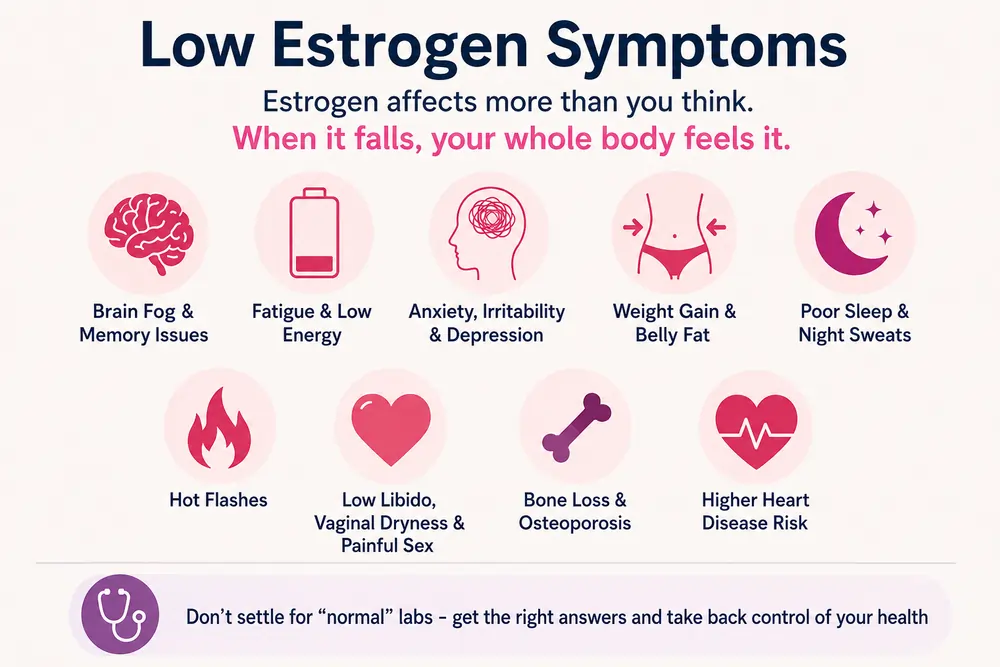
Brain Fog and Memory Problems: The Cognitive Low Estrogen Symptom
Memory lapses, difficulty finding words, and reduced focus are among the most common complaints in midlife women — and the most commonly dismissed as stress.
Estrogen supports the brain regions responsible for memory and verbal fluency. When estrogen falls, these regions lose support. The result is a clinical entity now called menopause-related cognitive impairment.
Two-thirds of all Alzheimer's cases occur in women. Hormone therapy initiated within 5–10 years of menopause may reduce dementia risk — a window that closes if missed.
For women whose brain fog is severe, NAD+ therapy can also help by supporting mitochondrial function in the brain.
Persistent Fatigue: One of the Most Overlooked Low Estrogen Symptoms
Persistent fatigue that doesn't improve with rest is one of the most common — and most under-investigated — symptoms of low estrogen.
Estrogen supports mitochondrial energy production, thyroid function, cortisol rhythm, and iron metabolism. When estrogen falls, mitochondrial instability increases, driving fatigue, brain fog, and reduced exercise capacity. A standard blood panel misses most of this.
For women whose fatigue has crossed into something more debilitating, the overlap with chronic fatigue syndrome (ME/CFS) is worth investigating.
Anxiety, Irritability, and Depression: The Mood Symptoms of Low Estrogen
Late perimenopause is associated with a significantly increased risk of depression compared to premenopause. The trigger isn't low estrogen alone — it's the variability of multiple hormone levels. Day-to-day swings destabilize the same brain chemistry that SSRIs target.
Progesterone matters here, too: low progesterone is one of the most missed contributors to depression and insomnia in women.
Weight Gain and Stubborn Belly Fat from Low Estrogen
As estrogen falls, fat redistributes to the abdomen, even when total body weight stays the same. Postmenopausal women have been shown to gain significantly more intra-abdominal (visceral) fat than premenopausal women. This visceral fat is metabolically active and drives insulin resistance, inflammation, and cardiovascular risk.
This is why "eat less, exercise more" fails most perimenopausal women. The hormonal balance changes, and hormones don't work in isolation. Treating one number without seeing thyroid, cortisol, insulin, and gut health is guesswork.
Sleep Disruption and Night Sweats from Low Estrogen
Low estrogen fragments sleep through night sweats, anxiety, and direct effects on sleep-regulating brain regions. Sleep disorders affect up to 60% of menopausal women, and the cascade affects nearly every other symptom on this list.
Oral progesterone can dramatically improve sleep in women who are deficient. The route matters: oral, vaginal, and topical progesterone have different pharmacokinetics, and the right route depends on your symptoms.
Hot Flashes — The Classic Symptom of Low Estrogen
The classic menopause symptom may be the most serious. Hot flashes can last over 7 years. Up to 80% of midlife women experience vasomotor symptoms. Some women have them for 14 years or longer.
Treating hot flashes isn't optional, it can lead to worse sleep, more depression, and higher cardiovascular risk. Hot flashes are not just a nuissance!
Low Libido, Vaginal Dryness, and Painful Sex: The Hidden Low Estrogen Symptoms
One of the most common — and most under-treated — symptoms of low estrogen is the loss of sexual function. Low libido, vaginal dryness, painful intercourse, and decreased arousal all become more frequent as estrogen falls.
Estrogen maintains the integrity of vaginal and urinary tissue, supports blood flow, and influences desire through both peripheral and central nervous system effects. When estrogen falls, the tissue thins, lubrication decreases, and sex becomes uncomfortable or painful.
This constellation has a name: the genitourinary syndrome of menopause (GSM). It also drives recurrent UTIs, urinary urgency, and a higher rate of intimacy avoidance — which compounds the relational and emotional toll of every other low estrogen symptom.
GSM is highly treatable. Most women never bring it up to their doctor. Doctors rarely ask.
Bone Loss and Osteoporosis: The Silent Low Estrogen Symptom
Bone loss accelerates rapidly after menopause and is silent until a fracture occurs. Women can lose up to 20% of their bone density in the 5–7 years surrounding menopause. One in three women over 50 will develop osteoporosis.
A DEXA scan and a personalized prevention plan are the difference between catching this early and reacting to a fracture.
Cardiovascular Disease — The Hidden Cost of Low Estrogen
Heart disease is the #1 cause of death in women. Estrogen keeps blood vessels relaxed, cholesterol patterns favorable, and inflammation low. When estrogen falls, all three can reverse.
Women with early menopause have a 40% increased lifetime risk of coronary heart disease. The standard cholesterol panel misses most of this — apoB, Lp(a), and inflammatory markers tell the real story.
Why "Normal" Labs Miss Low Estrogen Symptoms
Most doctor visits review basic blood tests based on population averages. They don't measure estrogen metabolites, full hormone panels, microbiome, or genomic variants like COMT and MTHFR that affect how your body processes estrogen.
You don't have to settle for the symptoms of aging.
Schedule a consultation today to speak with our hormone experts and learn about bioidentical hormone replacement therapy (BHRT). Our doctors combine BHRT with functional medicine testing and genomic testing for longevity and performance.

Anthony Kaveh MD
Dr. Kaveh is a Stanford and Harvard-trained anesthesiologist and integrative medicine specialist. He has over 1,000,000 followers on social media and has guided hundreds of patients throughout transformative healing experiences. He is an authority on Ketamine, NAD, SGB, and genomics-guided therapies. He is a continuing medical education lecturer in the Bay Area.