Zepbound Side Effects - and Supplements that Actually Help
Zepbound side effects are real and can hurt patients. Learn what supplements actually help reduce Zepbound's side effects.

Medically reviewed by Anthony Kaveh, MD
Stanford & Harvard-trained
Board-certified anesthesiologist
*IV Ketamine and NAD+ and the Stellate Ganglion Block have been used clinically off-label for decades. They are not FDA approved for the treatment of any psychiatric or pain condition. All medical treatments carry risks and benefits that you must discuss with a doctor at Clarus Health to learn if these therapies are right for you.

Zepbound works. But nausea, diarrhea, fatigue, and hormonal shifts stop a lot of people from sticking with it long enough to see real results. Here's what's actually happening — and what helps.
As always, speak with your doctor before starting or changing any supplements!
Zepbound Side Effects - What Causes Them?
Zepbound (tirzepatide) activates two receptors at once — GLP-1 and GIP. That dual action is what makes it more powerful than older weight loss drugs. It also makes the digestive side effects worse.
GLP-1 receptors line the gut and brainstem. When Zepbound activates them, food leaves your stomach more slowly — which helps you feel full faster, but also causes the nausea, bloating, and discomfort that hit hardest in the early weeks and after every dose increase. Real-world data confirms that gastrointestinal side effects are the primary reason patients reduce doses or stop treatment entirely.
The most common Zepbound side effects are:
- Nausea — the most frequent, especially early on and after dose increases
- Diarrhea — common in the first weeks
- Vomiting — less frequent, more likely at higher doses
- Constipation — can develop as gut motility slows
- Fatigue — related to eating less and losing weight quickly
- Hormonal changes — often overlooked but clinically significant
Ginger for Zepbound Side Effects
Ginger is the supplement with the strongest and most current evidence for GLP-1-related nausea. Pilot data from a 2026 study — the first to specifically test an over-the-counter supplement for GLP-1 nausea — found that a standardized ginger chewable significantly reduced nausea occurrence compared to placebo, with no adverse events in either group.
This is consistent with a large body of prior research showing ginger's antiemetic effects across multiple conditions. The mechanism makes sense: ginger's active compounds (gingerols and shogaols) act on the same receptors targeted by prescription anti-nausea medications like ondansetron.
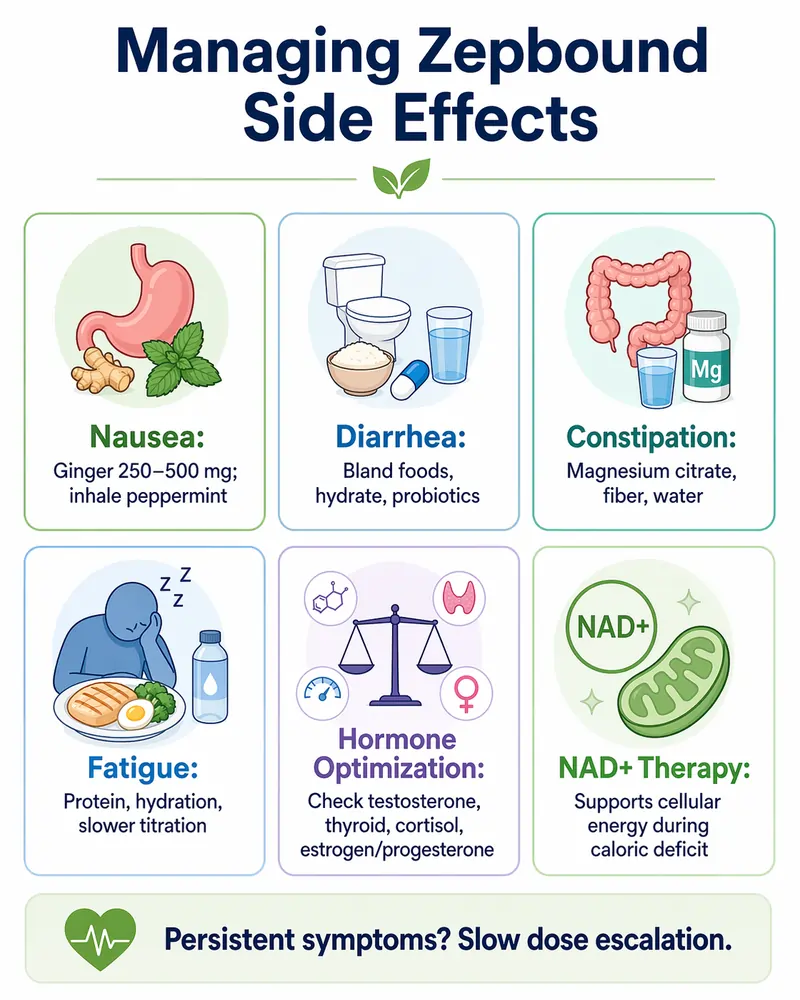
A practical starting dose is 250–500mg of standardized ginger extract taken as needed. Ginger chews work well for people who can't easily swallow capsules when nauseated.
Peppermint may Alleviate Zepbound Side Effects
Peppermint has clinical evidence for reducing nausea — specifically through aromatherapy. Multiple randomized trials have shown that inhaling peppermint essential oil significantly reduces nausea frequency and severity. The practical application: inhale peppermint oil directly from the bottle, apply a drop under the nose, or inhale steam from peppermint tea at the onset of nausea. Note that the evidence base is for inhalation, not oral capsules.
Slow Your Zepbound Dose Titration to Minimize Side Effets
The most underused strategy for Zepbound side effects isn't a supplement — it's slowing down. Zepbound follows a standard escalation schedule (starting at 2.5mg and increasing every four weeks), but this is a guideline, not a requirement. Staying at a lower dose longer until the body fully adapts is medically appropriate and makes a significant difference in tolerability for many patients.
Diarrhea Side Effects from Zepbound
- Diet: Bland, easily digestible foods during flares
- Hydration: Stay aggressively hydrated — diarrhea causes rapid fluid loss
- Probiotics: Some patients may find benefit for GI distress
Constipation Side Effects from Zepbound
- Magnesium citrate: 200–400mg daily is a gentle, well-tolerated option that also supports hundreds of other cellular processes
- Fiber and fluids (water): The foundation — nothing else works without both
Fatigue and Cellular Energy from Zepbound Side Effects
Rapid weight loss increases metabolic demands on mitochondria — the cellular engines that drive energy production. IV NAD+ is one of the most commonly requested adjunct treatments for patients on GLP-1 medications at Clarus Health, as NAD+ is central to mitochondrial energy metabolism and supports the pathways that help the body adapt to significant metabolic change.
Hormone Optimization to Reduce Zepbound Side Effects
One of the most overlooked Zepbound side effects isn't gastrointestinal at all — it's hormonal. Significant caloric restriction and rapid body composition changes affect the hormonal environment, and suboptimal hormones can undermine your weight loss efforts.
Key hormones to monitor during Zepbound treatment:
- Testosterone: Low energy availability suppresses testosterone production in both men and women — which reduces muscle preservation during weight loss, increases fatigue, and impairs metabolic function. Losing muscle instead of fat defeats the purpose of the Zepbound.
- Thyroid: Thyroid function directly governs metabolic rate. Suboptimal thyroid levels make weight loss harder and fatigue worse — and existing thyroid conditions may interact with caloric restriction in ways that warrant monitoring.
- Cortisol: Food restriction alters the HPA axis cortisol response, and chronically elevated cortisol promotes fat storage — especially abdominal fat — and muscle breakdown, working directly against Zepbound's goals.
- Estrogen and progesterone: For women, hormonal imbalance during weight loss can worsen mood, sleep, and energy. Perimenopause and menopause significantly complicate GLP-1 treatment if left unaddressed.
Testing and optimizing these hormones alongside Zepbound is one of the most effective ways to ensure the weight being lost is fat rather than muscle — and that energy, mood, and metabolism all move in the right direction. Bioidentical hormone replacement therapy (BHRT) is an important tool in this context for appropriate candidates.
Will Zepbound Side Effects be Dangerous for you?
Zepbound side effects are common but manageable. Ginger has the best current evidence for nausea. Peppermint aromatherapy is a practical add-on. Slowing your titration schedule often makes the biggest difference of all. And addressing hormones, cellular energy, and metabolic support is what separates patients who feel great on Zepbound from those who just tolerate it.
To reach your longevity goals, book a free 15-minute consultation to speak with one of our Stanford and Harvard-trained physicians today.

Anthony Kaveh MD
Dr. Kaveh is a Stanford and Harvard-trained anesthesiologist and integrative medicine specialist. He has over 1,000,000 followers on social media and has guided over 6,000 patients throughout transformative healing experiences. He is a medical educator on Ketamine, the Stellate Ganglion Block, Hormone Replacement, and NAD+ therapies.